About us

Who we are
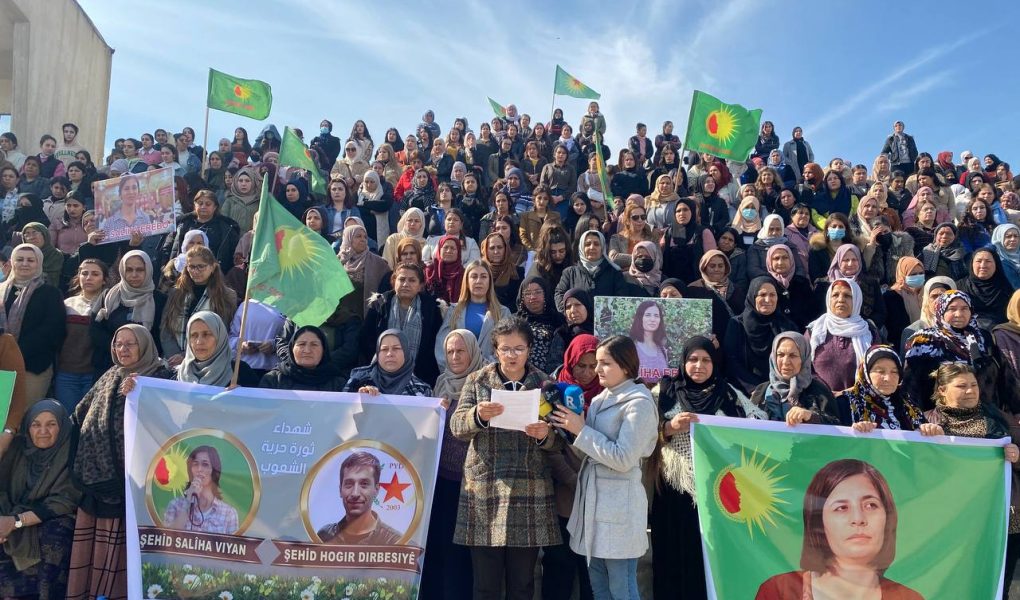
Kongra Star is a women’s umbrella organization operating primarily in Rojava, North and East Syria, with offices and projects across Syria, Kurdistan, the Middle East, and Europe. Our mission is to foster a free Rojava, a democratic Syria, and a democratic Middle East, while advancing women’s freedom worldwide. We fight for women’s liberation and for a democratic, free society—one that is capable of self-determination, organizes itself without relying on or becoming a state, and respects its diverse components.
The patriarchal system of exploitation that has oppressed humanity for over 5,000 years is rooted in the exploitation of women. In response, we embrace the philosophy of Abdullah Öcalan, and particularly the paradigm of a democratic, ecological society on the basis on women’s liberation. According to this paradigm, the society find their strength by organizing autonomously in areas such as self-defense, economy, justice, society, and culture – we can call this way of organizing the “democratic nation”. We are committed to challenging and dismantling all forms of patriarchy and misogyny, while resisting colonialist, assimilationist, genocidal, and capitalist practices and policies.
When women come together and organize, they gain the strength to liberate themselves and create a democratic, colorful, and free life. We believe that the foundation for building a free society lies in the liberation of women in all areas of life. We see women as the heart of society, and organizing women is essential in organizing society as a whole: that’s why our aim is to raise women’s awareness of their own strength and empower them to organize, in line with the principles of a democratic nation. We establish committees that address the needs of women in a decentralized and collective way.
To build a society capable of self-determination on ethical principles, one that embraces the diversity of its people and is rooted in values like solidarity, ecology, women freedom, it is essential that everyone shares responsibility for the people and the work that needs to be done. This requires, first and foremost, an intellectual revolution. We believe that Jineolojî, the science of women, is the most effective way to achieve this. Through Jineolojî, we can overcome the mental colonization imposed by capitalist modernity and foster the mindset of free women in a free society.
Our focus is organizing, educating, and empowering women and struggling for women’s liberation in all spheres of life. We identify how politics relates to the society, and to women in particular, and support women’s self organization to strengthen their self-determination. Through this, we have established women’s organizations, councils, educational initiatives and projects from the most local level, up to the whole of North and East Syria. We work with existing women’s organizations to strengthen their work, build coalitions and weave a more powerful women’s movement across the region. Our work spans the political sphere, the domestic and social spheres, and also develops women’s economy and self defense.
Our Aims
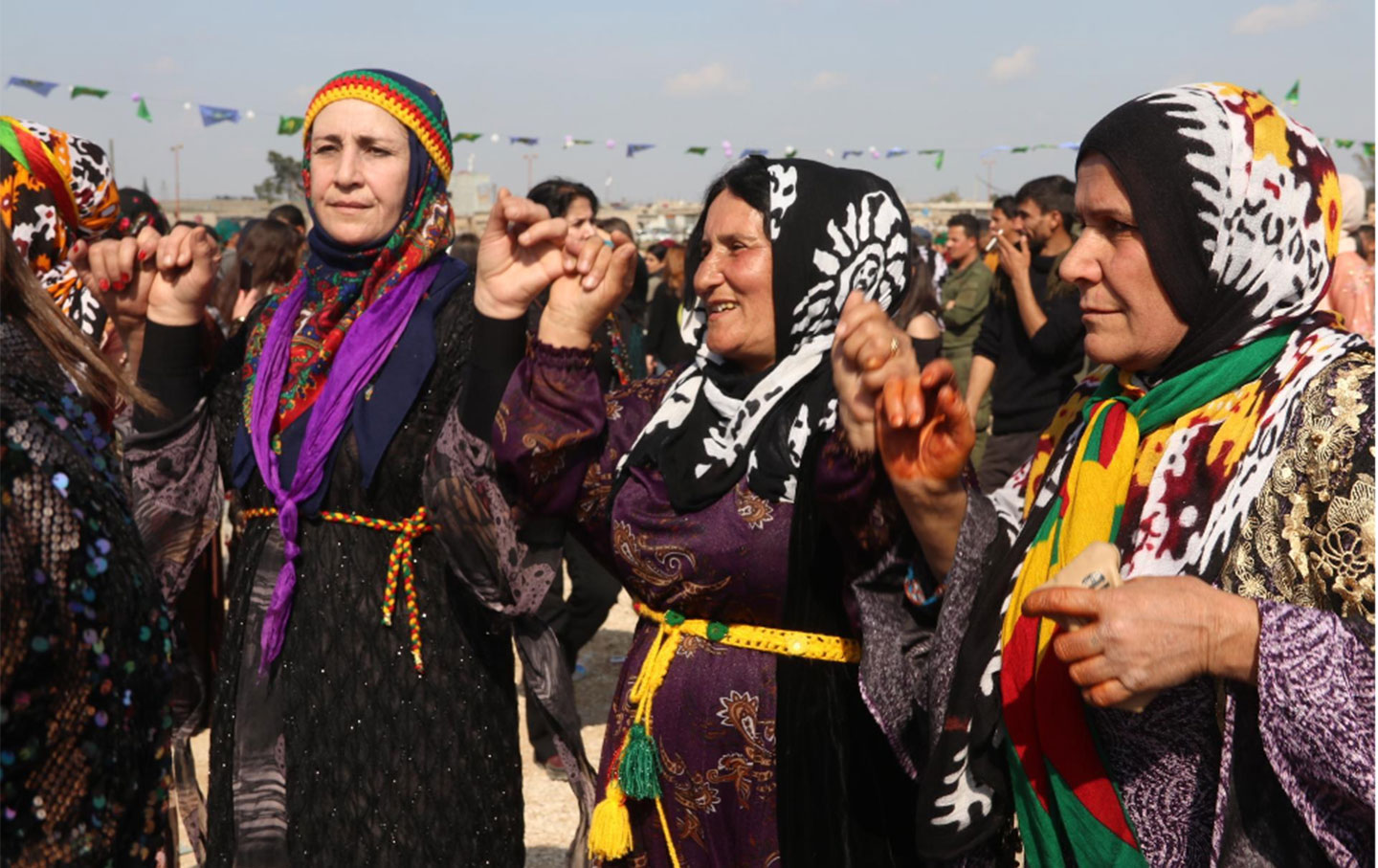
 We organize in Syria and abroad according to the principles of self-governance and free will of women. We cooperate with women’s organizations from different cultural and ethnic backgrounds.
 We adopt the approach of the democratic nation as an alternative to centralist and nationalist thinking. We work to achieve justice, freedom, and equal participation for all peoples and especially women.
 We organize according to the democratic ecological model, with a special focus on women’s liberation as a foundational principle.
 We rely on women’s perspectives to solve issues in the society.
 We organize in all areas of life according to the principle of democratic confederalism.
 We combat all forms of male domination, including sexism, racism, sectarianism, authoritarianism, violence, and exploitation.
 We work to institutionalize the co-chair system across all organizational structures, ensuring the free will of women and their representation in decision-making bodies. This is in accordance with the principle of equality.
 We play a leading role in organizing democratic society, which is based on councils and communes.
 We work to protect the gains of the women’s revolution in North and East Syria and to share this experience, with the rest of Syria and the entire Middle East.
 We base our organization on Jineolojî. We focus on raising awareness between women on principles of freedom and on the fight for women’s liberation.
 We fight against discrimination and authoritarianism, promoting a free and partecipatory life together. Free life together starts from the family and the relationships between men and women and extends to all aspects of social relations, promoting democratic family as well as society.
 We fight to change masculine mindsets and transform them so that we can achieve equality, justice, and partnership.
 We work to build a democratic family which is based on justice, equality, aesthetics, and freedom.
 We work to build an independent and conscious personality by educating children. We educate them to assume responsibility in society, internalizing the concept of social diversity, and to reinforce the values of respect and freedom of thought
 We place women’s self-defense at the core of our activities. We confront patriarchal authority at all levels.
 We resist all forms of physical, cultural, and political violence against women. This includes but is not limited to, honor killings and child marriage. We fight to protect social values and the right of all people to exist with their full cultural and material identity.
 We work to ensure the inclusion of women in all stages of Syria’s constitutional process, in order to ensure all laws and political mechanisms can secure their rights.

Our History
Kongra Star, originally called Yekitiya Star (named for the ancient Mesopotamian goddess, Ishtar), was founded in 2005 as a clandestine organization of mostly Kurdish women operating under the Baath Regime. These first years were difficult and dangerous for the women involved in organizing. Activists were targeted by security forces, arrested, and tortured. The fate of some of the disappeared women remains unknown to this day. However, this oppression did not stop the women of North and East Syria from struggling for freedom. On the contrary, it formed a solid foundation from which to act when the Syrian crisis erupted.
When the women’s revolution began in Rojava on July 19, 2012, the women’s movement played a leading role in the establishment of democratic autonomy in the region. Yekitiya Star played a key role in organizing and integrating all administrative efforts across the region, becoming one of the leading political movements in the region, which centered the importance of women’s liberation and political action. It began as a movement for primarily Kurdish women, but has grown to include women of all ethnicity and religions.
In 2016, Yekitiya Star changed its name to Kongra Star, becoming an umbrella organization of all women’s structures and institutions that had agreed to work within its charter. In addition, as the Arab majority regions of Manbij, Tabqa, Raqqa and Deir ez-Zor were liberated from ISIS and brought into the Democratic Autonomous Administration of North and East Syria, the Arab women found that they had similar cultural backgrounds to each other and faced similar challenges. As such, and inspired by the history of struggle of Kongra Star, they founded their own organization, which was named Zenobia Women’s Council at a conference in 2021. The Zenobia Council serves many of the same functions in the majority Arab regions as Kongra Star. Other women organizations are present in North and East Syria, like Weqfa Jin Azad and Sara Organization for the Fight Against Violence Against Women.
How We Work
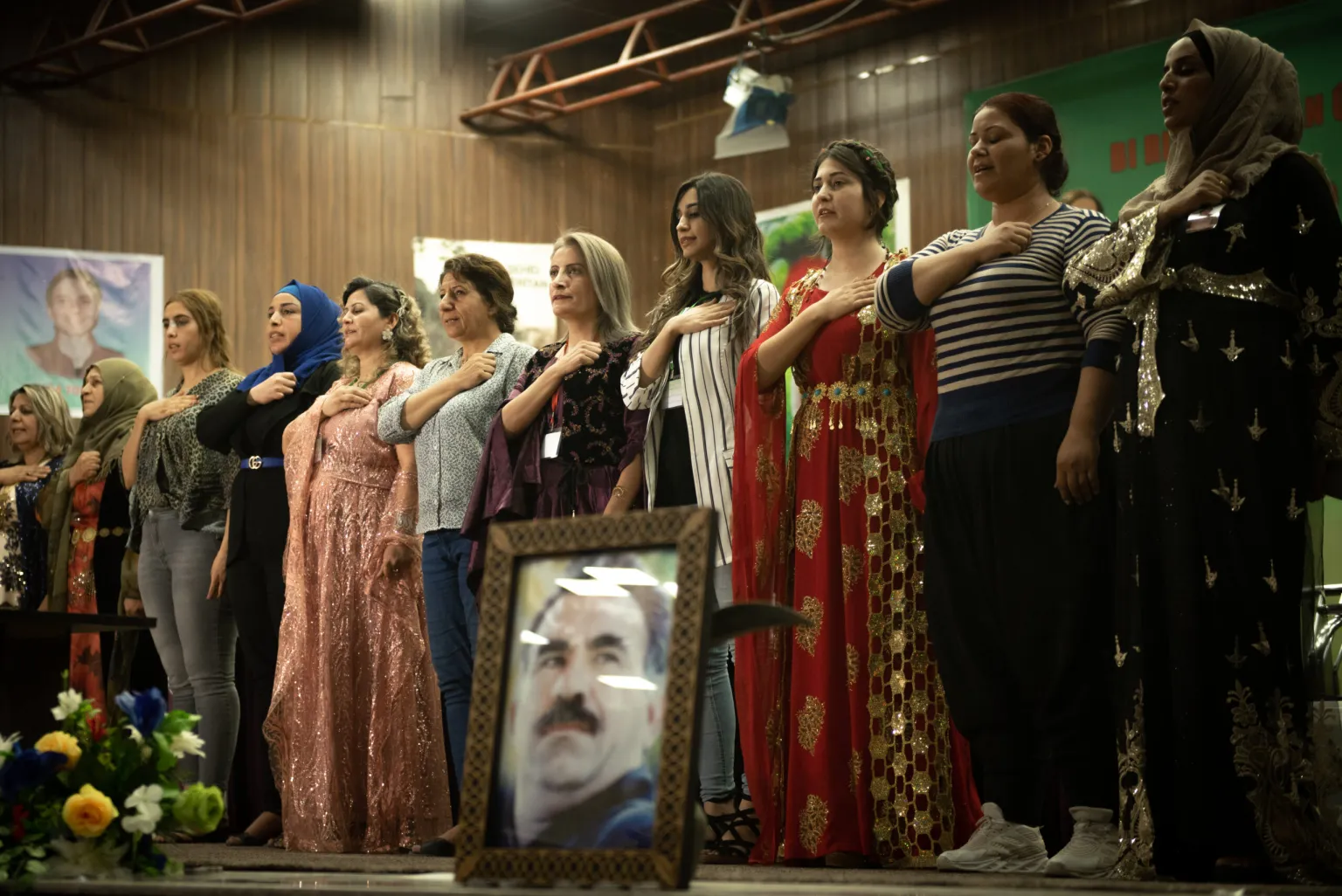
Kongra Star is composed of communes, councils, academies, cooperatives, and committees. The General Congress is held every two years, with all areas of work, organizing groups, and committees within Kongra Star participating. During the congress, the work of the past two years is evaluated, and decisions are made for the future. It is also when members of the committees and the administration of Kongra Star are elected.
Kongra Star defends all achievements of women and has been at the vanguard of the fight against ISIS and its ideology, and sees the YPJ as a force for protecting women. It defends the peaceful coexistence and democratic participation and representation of different ethnic and religious communities in social, political and cultural life.
Kongra Star sits within the democratic confederalist system of Rojava, a grassroots democratic system which is based on building community-based and decentralized power as an alternative to a centralized and top-down state power.
The system of Kongra Star exists in parallel to, and as part of, the wider system of self governance while retaining autonomy. This means that, for example, for every commune or council that exists as part of the autonomous administration, there is a corresponding women’s commune or council that plays a key strategic role in the work. We work to maintain this parallel autonomous system of women’s organizing, as well as advocating for and supporting equal participation and decision making in institutions where men and women are present, through the co-chair system and quotas for women’s participation. In this way, we develop women’s economy, social organization, education and knowledge attainment, self-defense, culture, justice and alliance building.
In order to pursue its goals, Kongra Star has 11 committees which each focus on a specific area of work.
Our Committees
Social Committee
The Social Committee aims to strengthen social cohesion and solidarity among people. It builds up institutions, organises educational programmes, and actions across various fields—particularly in the defence of human rights and the promotion of peace, and including sports. It is actively involved in organising activities and associations for children, the elderly, and people with disabilities. The committee places special emphasis on supporting families affected by war—whether they have been displaced, have lost loved ones, or experienced other forms of hardship. It works to empower women and society to adopt the values, mindsets, and behaviours of a Democratic Nation, including democracy in family structures.
Justice Committee
The Justice Committee is responsible for organising women’s institutions in the field of justice, providing them with the tools to carry out their work effectively. The committee recognises that systemic sexism creates unique legal challenges for women, and collaborates with other organisations working to address women’s justice issues.
In its efforts to build a justice system, it draws from the ethics of freedom that still exist in the roots of society and takes a leading role in advancing social justice and providing legal support grounded in these principles. The committee also works to expand women’s capacity for legal defence and advocates for the recognition of a dual legal system—including mixed gender and autonomous (women’s only) structures—at the national and international level.
Committee for Communal Economy
The Committee for Communal Economy is responsible for raising awareness and organising women’s economic initiatives. It works to build a system that supports women’s communal economic activities, resisting monopolistic economic policies at all levels. The committee promotes a socially responsible economy that is ecologically conscious; focuses on full community participation, particularly in rural areas.
It organises alternative economic spaces shaped by collective involvement and positions economic work as a core function of democratic communes and councils. The development of women’s cooperatives across diverse areas of society, including agriculture, industry, and handicrafts, is a central priority. The committee also establishes women’s academies, communes, and councils to strengthen women’s communal economic structures.
Art and Culture Committee
The Committee for Art and Culture carries out a cultural struggle against cultural genocide. It undertakes diverse efforts to preserve, promote, and revive cultures under threat.
It organises activities to support the development of institutions and organisations aimed at advancing culture, such as art, language, and literature of the Kurdish people, as well as other peoples living in Syria. It considers education and use of the mother tongue (native language), and the promotion of native literature, as foundational.
The committee‘s approach to ethics and aesthetics is based on the consciousness of free women. It works to organise these values within cultural and artistic life. It promotes women’s revolution as a cultural process and aims to develop new styles and behaviours in collaboration with women, grounded in ethical and aesthetic principles of life. The committee supports women’s perspectives on freedom within language and literature, particularly supporting initiatives and activities that develop these areas.
Education and Academies Committee
The Education and Academies Committee works to advance the intellectual and social development of society and women. It promotes a mental and ideological revolution as the foundation for building an ethical and political society. The committee establishes women’s academies to support widespread education for women.
It recognises that women play a leading role in building the system of Democratic Autonomy, and ensures that women cadres are trained and gain practical experience to support their society. The committee focuses on solving women’s issues and promoting the perspective of a free life for women in everyday practice.
Education is considered a fundamental social right, and the committee promotes the development of alternative education models and institutions for women. To do this, the committee designs and organises educational programmes and new education structures, coordinating with the existing widespread network. The committee also works coordinating women’s academies to make them more effective.
Health Committee
The Health Committee is responsible for organising and supporting women-led health initiatives. It opposes the exploitation of health as a profit-making sector by capitalist forces and resists the monopolisation of healthcare.
In contrast to the approach of capitalist modernity and society—which reduces health to individual physical well-being—the committee views health as a holistic concept that includes physical, mental, political, and social well-being. The committee challenges positivist approaches that divide health into fragmented disciplines, and it works actively to counter sexist perspectives in all areas related to healthcare.
Rather than focusing solely on treating illnesses, the committee prioritises identifying and addressing the root causes of disease. In a context where access to healthcare is increasingly restricted, the committee sees equal access to health services as a core principle of a democratic nation. It works to build and expand women’s health organisations at all levels—across all cantons, cities, districts, and villages.
Press Committee
The Press Committee sees democratic social transformation as a key tool for organisation, and bases its work on this principle. The committee is aiming to share the communal-democratic values of women and their ongoing struggles, resistance, and revolutionary developments, to ensure education that is accessible and empowering for women and broader society. The committee fights against the psychological and special warfare being waged in the field of women’s media, and works to develop independent, alternative women’s press platforms. It builds solidarity with other women’s press organisations and engages in collective initiatives.
It is responsible for organising and promoting the work of Kongra Star, presenting the women’s revolution as a foundation for society, and educating women in this. The committee actively challenges sexist attitudes and representations within the media sector. It promotes an alternative media rooted in the Democratic Nation paradigm, with a strong focus on ecological consciousness and women’s liberation.
Democratic Relations and Alliances Committee
The Relations and Alliances Committee is responsible for developing and organising women’s diplomacy efforts. It works to ensure that women, people, and diverse communities can live together peacefully and in solidarity. The committee bases its diplomatic work on the strength of society and builds relations and alliances according to the needs and interests of different communities.
It actively contributes to efforts for national unity among Kurdish political forces and works to share the experiences and achievements of Kurdish women’s organisations in this process. The committee develops common platforms and alliances with individuals and organisations who are anti-capitalist, anti-fascist, and anti-authoritarian. It builds alliances with those people and institutions, supporting resistance to the destruction of society and the targeting of women and children.
It works to ensure that the women’s democratic revolution is recognised as a shared legacy for women in the Middle East, and around the world. To do this, it fights in the broader struggle against patriarchal domination and capitalist modernity, a direct expression of male power.
The committee also establishes women’s diplomatic institutions, such as information and research desks, and trains and supports its members in the field of diplomacy.
Finance Committee
The Finance Committee is responsible for organising, strengthening, and systematising women’s financial activities. Its main duty is to oversee the organisation of financial initiatives within the organisation. The committee sees solving economic challenges as one of its primary goals, guided by financial policies rooted in women’s autonomy.
In this context, it collaborates closely with the Economic Committee on essential matters related to financial organisation and policies.
Ecology Committee
The Ecology Committee is responsible for protecting and promoting the well-being of all the elements of the ecosystem, including humans, water, soil, nature, and plants. It aims to raise awareness about environmental issues and develop a deeper connection between society and nature.
The committee’s primary focus is to fight against actions that harm the environment and disrupt the balance of nature. It works to create a balance between humans, nature, and all living beings, organising its activities to ensure the preservation of the environment.
Additionally, the committee strives to create a democratic, ecological, and non-sexist society, where environmental sustainability and gender equality are prioritised together.
Free Life Together Committee
The Free Life Together Committee plays a key role in building democratic family and society. It actively works to dismantle the dominant patriarchal mentality, promoting the establishment of an equal society based on principles of free coexistence. The committee is committed to social transformation by focusing on education and the development of women and other components of society.
It develops plans and programs aimed at educating women and the broader community across various sectors. The committee also works to strengthen relationships between institutions and organisations, fostering greater collaboration with women’s groups and empowering women in all areas of society.
Archive Committee
The Archive Committee is responsible for preserving the memory of the revolution, with a particular focus on the work and actions of Kongra Star. It carefully safeguards original documents, photographs, and media materials, including those that are not publicly available, ensuring that they serve as testimony to what has been accomplished and as a valuable tool for future analysis. In all, the committee plays a crucial role in maintaining the organisational memory of Kongra Star.