Interview with Emine Ose on Syrian Elections: Absence of Democracy and the Continuation of Exclusion
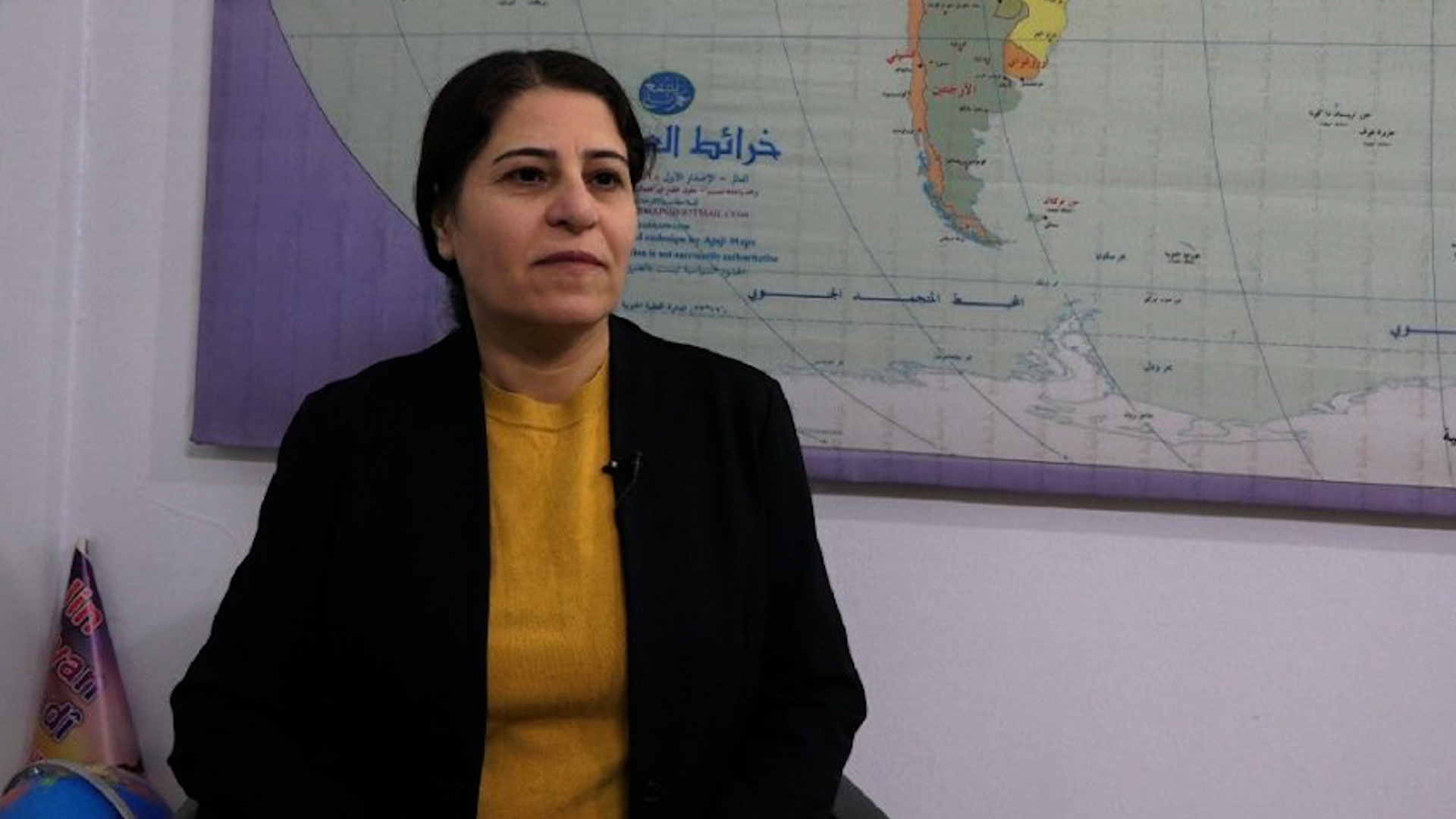
Emine Ose from Kongra Star discusses the Syrian elections, highlighting the absence of democracy and the continuation of exclusion of women and different components.
When and how were the elections conducted?
The transitional authorities of the interim government announced a provisional constitutional declaration in March 2025, stating that elections would be held between September 15 and 20, 2025.
The elections were not conducted by direct popular vote. Instead, local electoral bodies chose part of the council members, while the remaining members were directly appointed by the head of the interim government.
Were different regions in Syria able to participate fairly?
Some Syrian provinces, particularly Al-Hasakah, Raqqa, and As-Suwayda, did not participate in the electoral process, after the interim government presented baseless excuses.
These elections did not reflect the will of the people and excluded many societal components, and therefore did not meet the standards of free and fair elections.
What was the role of women in the elections, and how many were elected?
A 20% participation rate for women in the electoral bodies was set as a goal, but this does not mean women won by the same proportion.
Out of 210 seats, 119 deputies were elected in the first round, only 6 of whom were women — representing less than 3% of the total seats in the People’s Council.
What was the situation of non-Arab and non-Sunni components, and did any of them win?
This process reproduces the policy of exclusion and marginalization that has long prevented women and other societal components from actively participating in decision-making.
It cannot be considered a step toward the desired democratic transition.
The elections were held in the absence of a safe legal and political environment and excluded most national forces and societal components.
The transitional authority deliberately ignored opposition voices and held formal elections based on a provisional constitution without national consensus, resulting in a council lacking popular and political legitimacy.
Low voter turnout further confirms the lack of transparency, except in areas considered strongholds of anti-democratic ideology.
Most Syrians expressed their rejection of this electoral “performance” by not going to the polls, sending a clear message of non-recognition.
These elections lacked true representation of women, which is a setback for all principles of justice and equality that Syrian women have fought for decades.
Excluding women from candidacy and active participation is deliberate and reflects an authoritarian mindset that refuses to recognize women’s role in building Syria’s future.
Why are these elections undemocratic and why call for non-recognition?
Any election that excludes women, societal components, and democratic forces cannot be considered transparent or fair, similar to methods previously used by the Baath regime in Syria.
We emphasize that elections excluding women, societal components, and national opposition forces are not democratic and do not represent the Syrian people.
Compared to the Baath government, what has changed and why is the al-Jolani government dangerous?
National forces, societal components, and women feel concerned about the current interim government led by al-Jolani, also known as Ahmad al-Shar’, due to practices carried out directly or indirectly by HTS leaders holding senior positions in the government.
Massacres committed by the Ministry of Defense and Internal Security against Alawites in the Syrian coast and Druze in As-Suwayda, along with security chaos and economic deterioration, confirm the danger of this government for Syria’s social fabric and future.
All government steps have shown an authoritarian jihadist mindset: starting from the national conference that excluded women and societal components, forming a 23-ministry government with only one female minister, and issuing a provisional constitutional declaration that did not guarantee the rights of women or societal components.
These indicators show that this government poses a threat not only to Syria but also to regional stability.
Appeal to friends inside and outside Syria
We, as women, especially in northern and eastern Syria, call on our friends inside and outside Syria not to recognize these elections that excluded women and societal components.
We urge acknowledgment of the government’s danger, support for Syrian societal components’ demands, and pressure on global public opinion to take serious steps for Syria to ensure participation of all national forces, societal components, and women in building a new, democratic, decentralized Syria that guarantees justice and equality.
October 25, 2025